
Understanding Aikido techniques: a breakdown
World Aikido Yoga
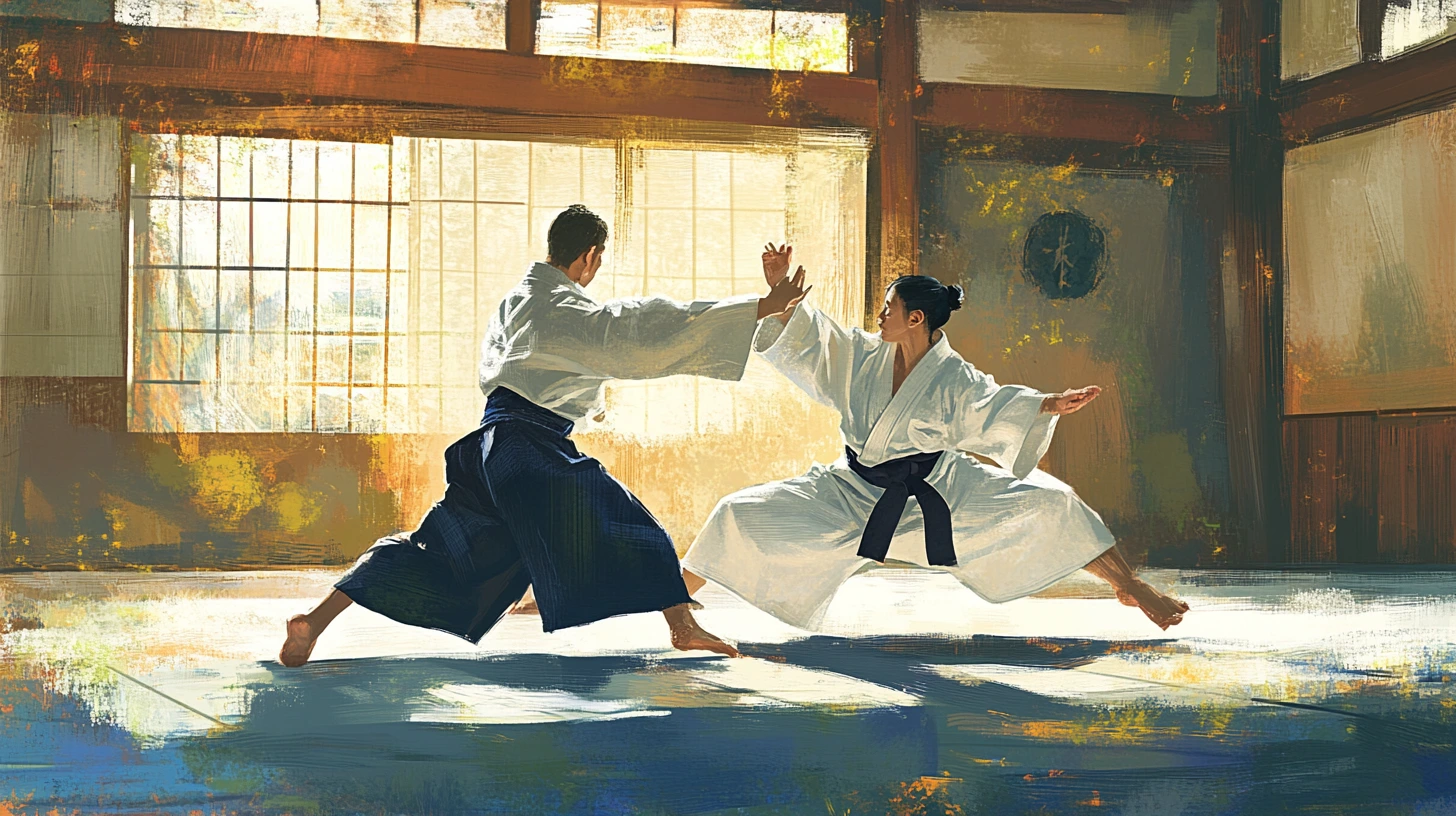
Aikido is a modern Japanese martial art that focuses on harmony, fluid movement, and the redirection of force. Unlike some other martial arts that rely on brute strength or aggressive confrontation, Aikido offers a philosophical approach centred around non-violence and self-defence. This guide aims to break down Aikido techniques for a better understanding, highlighting the art’s beauty, practicality, and purpose. Whether you’re a beginner or a seasoned practitioner, understanding the essence of Aikido can deepen your practice and appreciation of this unique martial art.
The philosophical foundation of Aikido
The essence of harmony
At the heart of Aikido lies the philosophy of harmony and balance. The term “Aikido” itself combines three Japanese characters: “Ai” meaning harmony, “Ki” meaning spirit or energy, and “Do” meaning the way or path. Therefore, Aikido can be interpreted as “the way of harmonising energy.”
Aikido teaches that it is more beneficial to blend with an opponent’s force seamlessly rather than resist it directly. This concept is profound not just in martial applications but also as a life principle, encouraging practitioners to navigate challenges with grace and adaptability.
The non-violent approach
Unlike other martial arts, Aikido primarily focuses on self-defence without inflicting harm on the opponent. This non-violent approach aligns with the practice’s philosophical roots, promoting peace and reconciliation rather than aggression and dominance. It encourages practitioners to control a conflict’s spirit rather than injuring or overpowering the opponent.
Research suggests that non-violent conflict resolution can lead to more sustainable social agreements outside martial arts source. This aligns well with Aikido’s peaceful approach.
Key Aikido techniques
Basic movements
Tai Sabaki (Body movement)
Aikido’s core revolves around mastering body movement, known as Tai Sabaki. These movements allow practitioners to evade attacks fluidly and position themselves favourably. The key here is maintaining a centred and balanced stance while executing movements with precision and grace.
Ukemi (Receiving body)
Ukemi refers to the art of falling safely. Since Aikido relies significantly on throws and joint locks, mastering Ukemi is paramount for safety and effectiveness. Proper Ukemi technique allows practitioners to neutralise force and energy, ensuring they can respond dynamically to being thrown or immobilised.
Throws
Ikkyo (First control)
Ikkyo is one of the fundamental techniques in Aikido and involves controlling the opponent by manipulating their elbow and shoulder joints. It’s primarily used to control and neutralise an attack without causing injury to the aggressor.
Shiho-nage (Four-direction throw)
Shiho-nage is a versatile throwing technique that involves leading an opponent’s force in a circular motion, which unbalances them and results in a controlled throw. It’s named “four-direction” due to its capability to throw an opponent in various directions.
Joint locks
Nikkyo (Second control)
Nikkyo is a painful wrist lock that directs the opponent’s energy downward, effectively immobilising them and providing the practitioner with control. This technique requires precision and understanding of joint mechanics to avoid injury while maintaining control.
Sankyo (Third control)
Sankyo is a spiralling wrist lock that twists the opponent’s arm, leading their focus and posture off balance. Practitioners can use this control to escort an opponent or transition into other techniques.
The science behind Aikido techniques
Biomechanics and balance
Aikido techniques heavily rely on understanding biomechanics, which is the science of movement in living organisms. Aikido practitioners often move in circular patterns, utilising the concept of torque – a twisting force that causes rotation. This rotational motion helps unbalance the opponent, making it easier to execute throws and joint locks.
When biomechanical principles are applied effectively, techniques are executed with minimal energy while achieving maximum impact, demonstrating why smaller practitioners can effectively handle larger opponents. Researchers have examined the biomechanics of martial arts like Aikido to understand its effectiveness and safety source.
Psychology and conflict resolution
From a psychological perspective, Aikido might be seen as an embodiment of conflict resolution. Practitioners are trained to remain calm and maintain mental clarity during confrontations, fostering the necessary mindset to resolve conflicts peacefully. Studies indicate that Aikido can have psychological benefits, improving focus, resilience, and interpersonal skills, which are essential for conflict resolution source.
Physiology and health
Physiologically, Aikido provides a full-body workout that engages various muscle groups. Regular practice can improve cardiovascular fitness, muscle strength, and flexibility. Aikido’s focus on fluid and continuous movement increases the practitioner’s endurance and agility, making it beneficial for overall health.
According to research, martial arts like Aikido help enhance cardiovascular health and aid in muscle and joint conditioning source.
Applying Aikido techniques in daily life
Managing personal disputes
One of the real-world applications of Aikido techniques is in personal conflict resolution. Just as practitioners blend with physical energy, the same principles can apply to emotional and verbal interactions. Approaching conflicts with openness and the desire to harmonise rather than confrontationally can lead to more productive and peaceful resolutions.
Stress reduction and mindfulness
Aikido’s practice encourages mindfulness—a state of active, open attention to the present. Focusing on techniques, posture, and movement aid in clearing the mind, thereby reducing stress and improving mental clarity. The art’s meditative aspect, rooted in its flowing movements and breathing exercises, supports relaxation and stress management.
Studies have confirmed the effectiveness of mindfulness practices in reducing stress and improving cognitive focus, aspects integral to Aikido training source.
Building confidence and discipline
Aikido training fosters confidence and discipline, empowering practitioners to trust their abilities and respond calmly under pressure. This confidence often transcends the dojo, positively affecting personal and professional life.
Summary
Aikido presents a unique blend of martial arts philosophy and effective self-defence through its distinctive techniques and principles. It champions harmony, balance, and non-violence, encouraging practitioners to control conflicts rather than confront them head-on. Its application extends beyond the dojo and into everyday life, offering valuable lessons in conflict resolution, stress management, and personal development.
The beauty of Aikido lies in its fluidity and grace, enabling individuals to navigate challenges with resilience and adaptability, backed by science and a profound understanding of human mechanics and psychology. Whether you are new to the discipline or looking to deepen your understanding, Aikido offers insights and skills beneficial for both personal and physical growth.
Frequently asked questions
What is the primary focus of Aikido training?+
Aikido training primarily focuses on harmony, balance, and non-violent conflict resolution through techniques such as throws, joint locks, and body movements. It emphasises self-defence without causing harm.
How can Aikido techniques be applied to everyday life?+
Aikido principles can be beneficial in managing personal disputes, reducing stress through mindfulness, and improving overall confidence and discipline.
Is Aikido effective for self-defence?+
Aikido is highly effective for self-defence as it focuses on understanding the opponent's force and redirecting it, providing tools to control rather than confront.
Can anyone practice Aikido, regardless of age or physical condition?+
Yes, Aikido is accessible to individuals of varying ages and physical conditions. Its focus on technique over strength makes it adaptable for different body types and fitness levels.
How does Aikido compare to other martial arts?+
Unlike many martial arts that focus on aggressive confrontation, Aikido emphasises harmony and blending with an opponent. It prioritises joint locks, throws, and the philosophy of non-violent self-defence.