
Gaining confidence through Aikido training
World Aikido Yoga
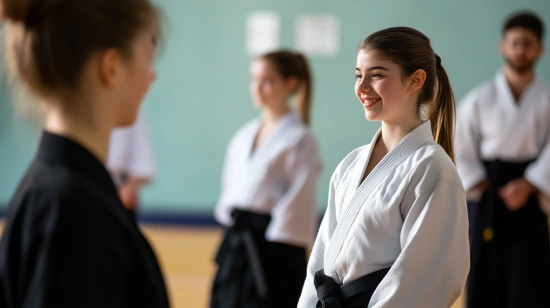
In the contemporary world, gaining self-confidence is crucial for navigating personal and professional challenges. One unique way to cultivate such confidence is through the martial art of Aikido. Aikido, which translates to “the way of harmony with the spirit,” offers more than just physical self-defence techniques; it is a journey towards self-discovery and empowerment.
Understanding Aikido: Philosophy and Practice
Aikido is a Japanese martial art developed by Morihei Ueshiba in the early 20th century. Unlike other martial arts that focus on striking, Aikido emphasises blending with the opponent’s movements and redirecting their energy. This harmonious approach aims to neutralise conflict without causing harm to the opponent.
The philosophy behind Aikido
Aikido’s philosophy is deeply rooted in promoting peace and reconciliation. It teaches practitioners to maintain calm and stability in the face of aggression, focusing on self-control and discipline. The art encourages students to look beyond winning and losing, aiming instead to foster a deep understanding of spiritual growth and harmony.
The practice of Aikido techniques
Practicing Aikido involves learning various techniques such as throws, joint locks, and pins. Students work in pairs, learning to receive (uke) and execute (nage). This repetitive practice builds muscle memory, agility, and awareness, playing a significant role in self-confidence development.
Building Confidence Through Aikido Training
Training in Aikido can significantly enhance both physical and mental confidence, making it more than just a self-defence technique.
Enhancing self-awareness and body language
Effective Aikido training improves self-awareness and body language. According to a study published in the journal Emotion, becoming more aware of one’s own body and movements can greatly enhance self-confidence. In Aikido, understanding how your body works and controls not only helps in mastering techniques but also in better posture and poise.
Overcoming fear and building resilience
Practitioners often face simulated conflicts in a controlled setting, helping to manage fear and anxiety. This regular exposure helps in managing real-life stressful situations more effectively. Experiencing success in overcoming challenges and handling pressure enhances resilience, contributing significantly to self-confidence.
Physical Benefits of Aikido
The physical benefits derived from Aikido further bolster confidence. Engaging in this martial art improves one’s physical health, which has a profound impact on mental well-being.
Increased fitness and strength
Aikido training enhances cardiovascular health, muscle strength, and overall physical endurance. The rigorous training sessions build stamina, flexibility, and coordination. As practitioners become physically stronger, they often find an increase in positive self-image and body confidence.
Improving reflexes and coordination
Aikido requires smooth, rapid responses to an opponent’s movements, honing reflexes and coordination. This improvement is not only beneficial in the dojo but also increases one’s readiness in daily life.
Psychological and Emotional Growth Through Aikido
Aikido is not just about physical prowess; it significantly contributes to mental and emotional development.
Developing focus and concentration
To execute Aikido techniques effectively, one must maintain a high level of concentration. This practice enhances focus, which can be beneficial in personal and professional settings. Consistent training transforms this focused attention into a habitual mental state.
Fostering a positive mindset and emotional stability
Regular Aikido practice fosters a positive mindset by teaching acceptance of one’s vulnerabilities and working on them constructively. Emotional stability is achieved as students learn to remain calm under pressure, leading to improved decision-making and confidence in one’s abilities.
Integrating Aikido with Yoga and Meditation
Combining Aikido with practices like Yoga and Meditation enriches the benefits, offering a holistic approach to well-being.
Enhancing flexibility and relaxation with Yoga
Yoga complements Aikido by improving flexibility, balance, and breath control, which are essential in executing Aikido techniques gracefully. Yoga promotes relaxation and reduces stress, contributing to a serene state of mind vital for optimal performance in Aikido.
Stress management through Meditation
Meditation is a powerful tool for stress management, helping to cultivate a tranquil mind. Practising meditation alongside Aikido fosters deep mental clarity and relaxation, necessary for gaining self-confidence.
Summary
In conclusion, Aikido is a powerful martial art that goes beyond physical techniques to offer profound confidence-boosting benefits. By enhancing self-awareness, physical fitness, mental clarity, and emotional resilience, Aikido serves as an ideal discipline for those looking to improve self-confidence. When integrated with Yoga and Meditation, this holistic path promotes overall well-being, making Aikido a unique and valuable addition to anyone’s personal development journey. Explore the transformative potential of Aikido today at Aikido Bayside and step into a more confident, harmonious way of living.
Frequently asked questions
How does Aikido help in building self-confidence?+
Aikido helps in building self-confidence by enhancing self-awareness, physical fitness, emotional resilience, and mental focus. The embodiment of these traits through consistent practice promotes a stronger sense of self.
Is Aikido suitable for beginners seeking self-development?+
Yes, Aikido is ideal for beginners as it combines physical training with mental discipline, offering a balanced pathway to self-development. Anyone at any age can start Aikido to improve their confidence and overall well-being.
Can practicing Aikido improve mental health?+
Absolutely, regular Aikido practice improves mental health by reducing stress, enhancing focus, and fostering emotional stability through its philosophical teachings and physical techniques.
Is Aikido effective for self-defence?+
While the primary focus of Aikido is not aggressive self-defence, it teaches effective techniques to neutralise threats non-violently. Practitioners learn to use an opponent's energy to protect themselves.
How can Aikido be integrated with other wellness activities?+
Aikido can be easily integrated with Yoga and Meditation, offering comprehensive benefits to practitioners. This fusion enhances flexibility, mental clarity, and emotional balance, leading to improved self-confidence.