
Practising Aikido at home: tips and techniques
World Aikido Yoga
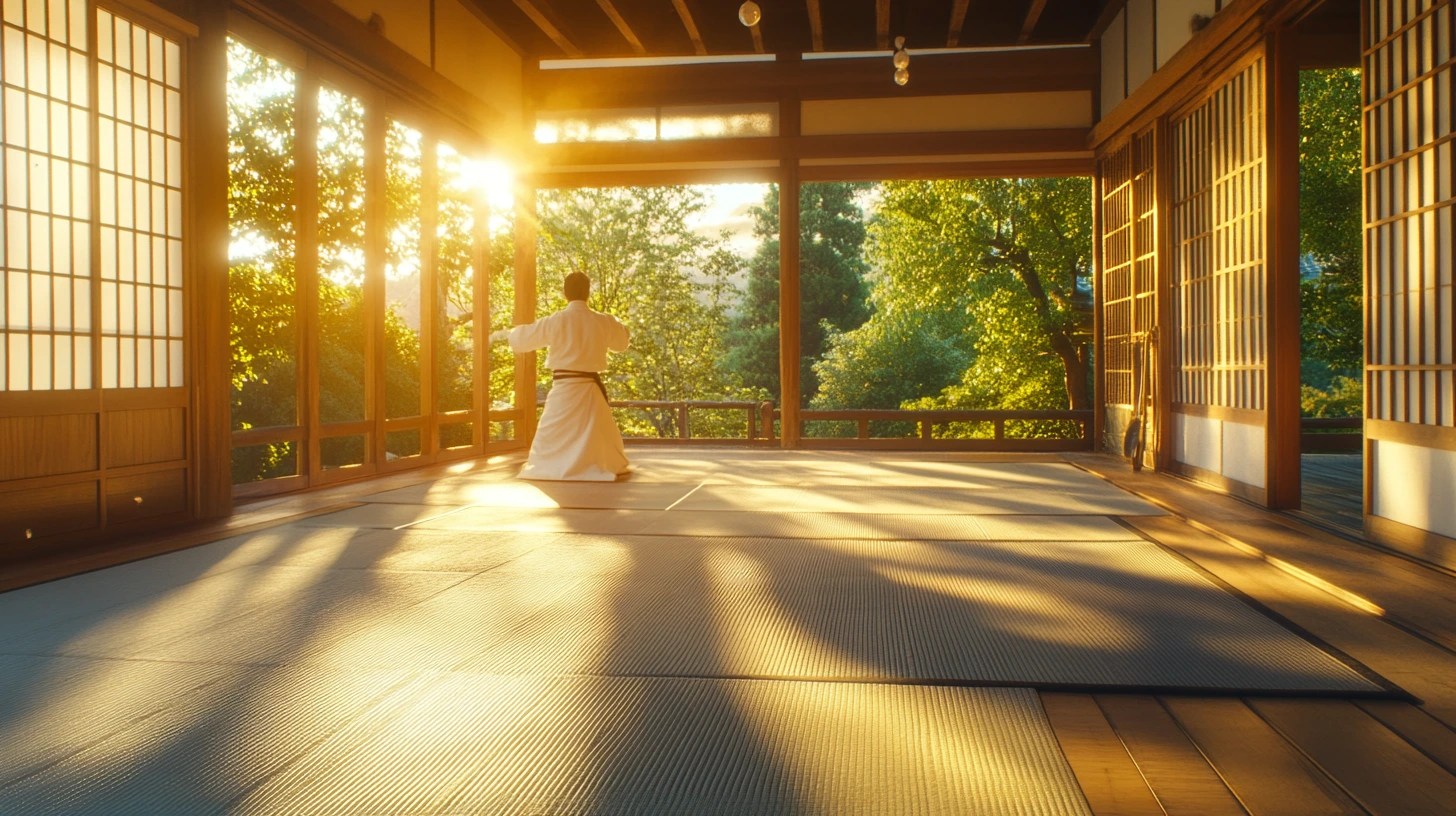
In today’s fast-paced world, maintaining both physical and mental well-being can be a challenge. Aikido, a Japanese martial art, offers a holistic approach by harmonising the mind, body, and spirit. Its flowing movements and emphasis on balance and coordination make it not just a self-defence system, but a pathway to personal growth and wellness. Practising Aikido in a dojo is ideal, but what if you want to refine your skills from the comfort of your home? This guide provides invaluable tips and techniques to safely and effectively practice Aikido at home.
Setting up your home practice space
Creating a suitable environment for Aikido practice at home can aid in optimising your training sessions. Here’s how to set up your space effectively.
Choose a safe and spacious area
Practising Aikido requires ample space to move freely and safely. Clear furniture and any obstacles that could pose a risk. Aim for at least a 3-metre square area to perform basic techniques comfortably.
Invest in a non-slip mat
Aikido involves a lot of movements that require stable footing, and a non-slip mat can prevent accidents. Consider using a tatami mat if possible, as they provide cushioning for falls and are traditional in practice dojos.
Ensure good lighting and ventilation
Good lighting helps improve concentration and reduces eye strain during practice. Equally, adequate ventilation is essential for maintaining energy levels and comfort during a workout.
Fundamental Aikido techniques at home
Without a partner, some Aikido techniques can still be practised effectively to enhance physical conditioning and muscle memory.
Ukemi (falling techniques)
Ukemi is a foundational skill in Aikido that involves learning how to fall safely. Focus on forward rolls and backward falls. Start slowly to ensure your movements are controlled and fluid. Watch online video tutorials or practice in front of a mirror to self-correct.
Tai Sabaki (body movement)
Tai Sabaki is the art of using your whole body in movement. Practising these circular steps at home helps improve your flexibility and balance. Work on mastering the basic pivots and sidesteps which are integral to the evasive nature of Aikido.
Solo Kata and shadow techniques
Practice traditional kata movements without a partner. These sequences of moves train your body positioning and muscle memory. Shadow training, much like shadow boxing, helps develop timing and proper technique application.
Incorporating Aikido principles with yoga and meditation
Integrating Yoga and Meditation with your Aikido practice at home can result in greater physical and mental benefits.
Yoga for alignment and flexibility
Yoga is a valuable tool for enhancing your Aikido practice. It improves flexibility, alignment, and helps in understanding the concept of centre, a crucial Aikido principle. Focus on poses that enhance balance like tree pose or warrior pose.
Meditation for mental clarity
Aikido is not just a physical pursuit, but a mental one. Meditation can help you achieve mental clarity and focus, key elements in mastering Aikido techniques. Daily meditation can lead to better concentration during practice and become more aware of your body movements and emotions.
The benefits of regular home practice
Regular practice can substantially improve your skills and provide numerous other benefits.
Enhancing physical fitness
Aikido is an excellent way to stay fit. It burns calories, strengthens muscles, and improves cardiovascular health. Practising regularly helps in weight management and enhances endurance.
Building confidence
As you improve your technique and realise your self-defence capabilities, your confidence levels will naturally increase. This can positively impact various areas of your life.
Promoting peace and mindfulness
Aikido philosophy encourages non-competitive focus and harmony. Regular practice promotes mindfulness and reduces stress, providing a sense of peace.
Common challenges and solutions
Home practice can also present unique challenges, but these can be overcome with the right approach.
Lack of motivation
Set a schedule and specific goals to keep motivated. Remind yourself of the benefits and perhaps find online communities or friends to discuss your progress with.
Need for feedback
Feedback is crucial for improvement. Record your sessions to self-review, or seek online classes and workshops to receive expert advice.
Summary
Practising Aikido at home offers a unique opportunity to enhance your physical, mental, and spiritual well-being. By setting up a dedicated space, focusing on key techniques, and integrating complementary practices like Yoga and Meditation, you can reap the benefits of this ancient art from the comfort of your living room. Stay committed, be patient, and enjoy the journey of self-improvement and inner harmony that Aikido offers.
Frequently asked questions
How often should I practice Aikido at home?+
Aim for at least three to five sessions per week to see significant progress, ensuring each practice lasts about 30 to 60 minutes.
What should I wear during home training?+
Wear comfortable clothing that allows full range of motion, such as a traditional gi or flexible sportswear.
Can Aikido be practised without a partner?+
Yes, many Aikido techniques can be refined alone, focusing on improving your form, footwork, and body movements before applying with partners.
Is it necessary to learn Aikido from an instructor?+
While home practice is beneficial, learning from an experienced instructor is crucial to avoid developing poor habits and to gain accurate, expert guidance on techniques.
How can I measure my progress in Aikido?+
Evaluate your progress by keeping a journal, recording videos of practice sessions, and doing regular self-assessments. Additionally, attending formal classes periodically could provide insight into your development.