
Aikido principles: harmony and non-resistance
World Aikido Yoga
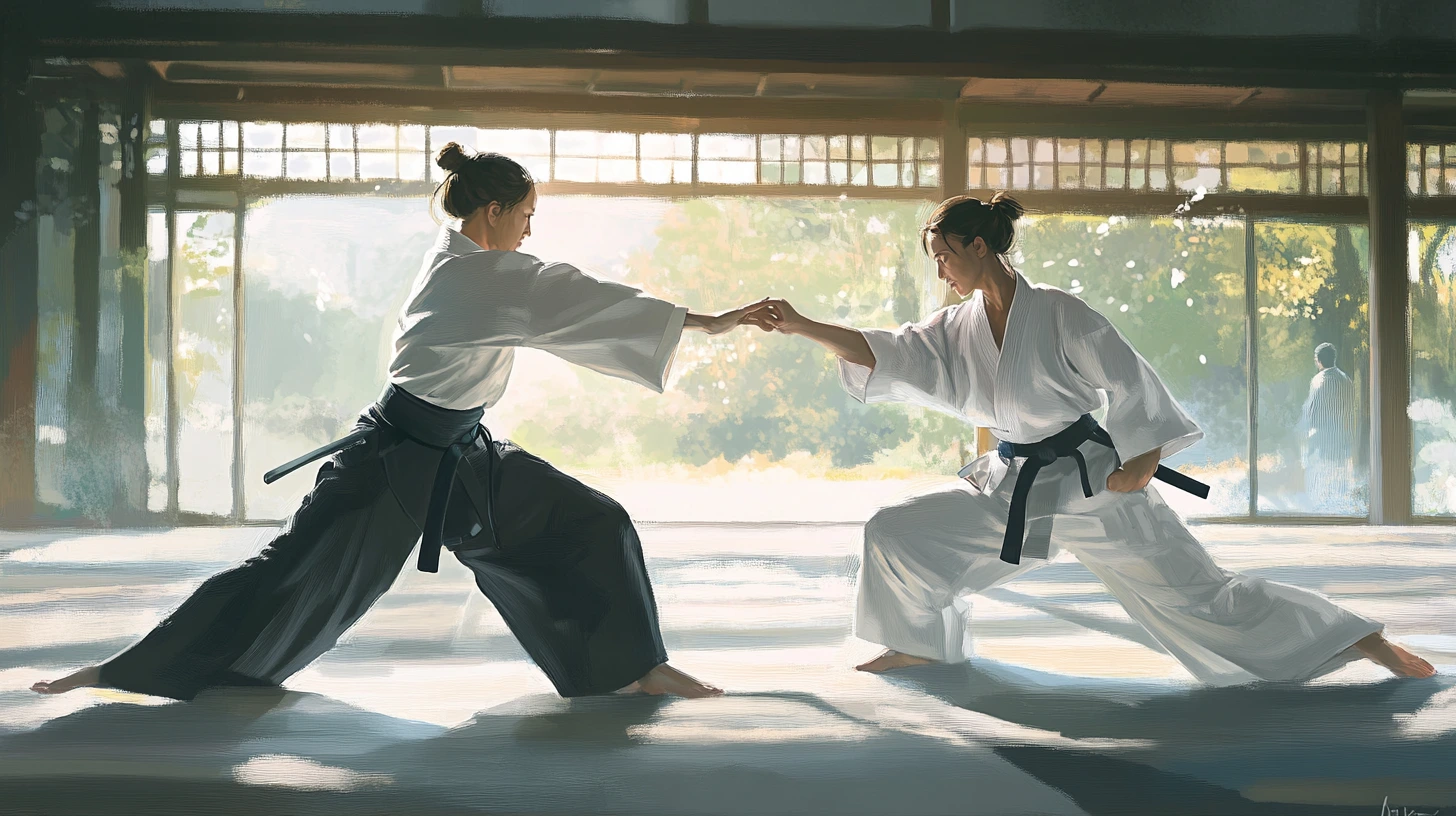
Aikido, often referred to as the “art of peace,” is a unique martial art that integrates both physical and philosophical aspects. Developed in Japan in the early 20th century by Morihei Ueshiba, Aikido means “the way of harmony with the spirit”. In this practice, harmony and non-resistance are central tenets, distinguishing Aikido from combative or aggressive forms of martial arts. This ideology makes Aikido not just a means of self-defence, but also a journey towards personal growth, mindfulness, and inner peace.
Harmony: The core of Aikido principles
The concept of harmony in Aikido
Harmony in Aikido is about aligning oneself with the force of an opponent rather than opposing it. It is the art of effectively managing conflict by blending with the attack, redirecting the energy, and neutralising the threat without causing harm. This principle is deeply rooted in the philosophy that true victory is self-mastery, achieved through maintaining balance and control both physically and mentally.
The practice of harmony in Aikido involves sensitivity to the opponent’s movements – sensing their intentions and adjusting accordingly. By staying relaxed and aware, the practitioner can merge with the attack force and dissipate it. This ability to harmonise dosages and movements leads to effective techniques that are both elegant and efficient.
Mind-body connection through harmony
Harmony is also about connecting the mind and body. Aikido techniques require a balanced state of mind and body. This correlation is akin to a dance where the leader and follower must be in sync to create fluid motion. When the mind is calm and focused, it directs the body effortlessly. This connection aligns with various studies highlighting the mind-body relationship’s importance in stress reduction and mental health source.
Non-resistance: Facing challenges with an open mind
Understanding non-resistance in Aikido
Aikido’s philosophy of non-resistance emphasizes the futility of brute force. Instead of meeting force with force, practitioners are taught to be flexible and yielding. This principle transforms potentially hurtful confrontations into learning opportunities where both parties feel secure and respected.
Non-resistance as a life principle
Incorporating non-resistance into daily life encourages flexible thinking and adaptability. When faced with challenges, adopting a non-resistant mindset facilitates problem-solving and stress management. The practice of non-resistance inspires resilience and a more open approach to life’s unpredictabilities.
Techniques that embody Aikido principles
Irimi: Entering and blending
Irimi is a foundational Aikido technique involving entering straight into an opponent’s space in a way that blends with their attack. This action distracts and unbalances the attacker without direct confrontation. This physical movement metaphorically encourages entering life’s problems rather than avoiding them, providing opportunities to turn potential conflicts into growth.
Tenkan: Turning and redirecting
Tenkan involves pivoting to remove oneself from the line of attack while turning and repositioning. It exemplifies the principle of non-resistance, creating a pathway to effectively guide the opponent’s energy away harmlessly. The concept of Tenkan teaches individuals to redirect negative energy and find advantageous resolutions.
Aikido’s impact on health and wellbeing
Physical benefits of Aikido
Engaging in Aikido promotes flexibility, strength, cardiovascular endurance, and balance. Training sessions encompass a full-body workout, providing numerous health benefits source. The low-impact nature minimises injury risks, making it an accessible exercise form for all ages.
Psychological wellbeing through Aikido
The harmony aspect inherent in Aikido practice aids in stress reduction and enhances mental health. The training emphasises presence, focus, and clarity of mind, paralleling mindfulness and meditation techniques. The practice of Aikido provides a meditative environment that nourishes psychological wellbeing.
Aikido as a tool for self-defence
Aikido’s approach to self-defence
Instead of overpowering an assailant, Aikido uses their energy against them, allowing individuals to protect themselves without causing harm. This defensive nature respects both the practitioner and the attacker, minimising violence.
Non-violent conflict resolution
Aikido instils the ability to manage conflict with finesse. Its approach promotes diplomacy and de-escalation, making self-defensive techniques humane and respectful. Practicing Aikido as self-defence teaches students to utilise techniques only when absolutely necessary, adhering to the ethos of peace.
Summary
In conclusion, Aikido is more than just a martial art—it is a philosophy of living harmoniously with others and oneself. By embracing the principles of harmony and non-resistance, Aikido practitioners develop a deeper understanding of conflict, control, and compassion. Aikido Bayside invites you to explore these principles through their inclusive programs, designed to cultivate physical, mental, and spiritual growth. By understanding and applying the teachings of Aikido, individuals can find balance and resilience both on the mat and in life.
Frequently asked questions
What does Aikido mean?+
Aikido translates to "the way of harmony with the spirit". It focuses on synchronising with an attack rather than opposing it, earning its reputation as the "art of peace".
Is Aikido effective for self-defence?+
Yes, Aikido is effective for self-defence because it focuses on redirecting the opponent's energy rather than engaging in aggression. This approach is practical for real-life situations, emphasising safety and conflict de-escalation.
Can Aikido improve mental health?+
Absolutely, practising Aikido can significantly improve mental health. It incorporates principles akin to mindfulness and meditation, reducing stress and enhancing focus, clarity, and emotional stability.
What are the key principles of Aikido?+
The core principles of Aikido are harmony and non-resistance. They foster an art form focused on neutralising conflicts peacefully and mastering oneself rather than dominating others.
Is Aikido suitable for everyone?+
Yes, Aikido is suitable for people of all ages and physical conditions due to its non-aggressive approach and emphasis on flexibility and adaptability. It provides physical and mental benefits without the strain of combative practices.